From the broiler house to the processing line, computer vision turns visual observations into measurements your team can use.
Walk into a broiler house with someone who has spent twenty years working with chickens, and they will probably notice a few things before you have made it through the door.
The birds are not spreading out as expected. One section looks different from another. The flock seems less uniform than it should.
Walk in with someone who has never worked in poultry, and they will probably notice that there are a lot of chickens.
And they would be right.
The difference is experience. The opportunity for computer vision is to give that experience a continuous record: how the flock is developing, what passed a production point and which events need attention.
At Zenaight, we engineer camera-based broiler weight and uniformity estimation, vision-based production counting and the software that turns those observations into operational records. Our relevant poultry work spans farming and processing. We build around the measurement your operation needs, with the capture setup, integration and validation included in the delivery.
For the full scope, explore our AI and computer vision systems for poultry production.
Your average broiler weight is on target. What about the rest of the flock?
Two houses can have the same average weight and very different distributions of bird sizes. That difference matters when planning catching, meeting processing weight ranges and understanding variation between flocks.
Poultry teams already use reference weighing, coefficient of variation (CV%) and uniformity to understand this. CV% expresses the standard deviation as a percentage of mean weight; uniformity commonly describes the proportion of birds within a defined band. They answer related questions, but they are not interchangeable.
Camera-based monitoring adds repeated visual observations between weighing sessions. Images become estimates of bird weight and size distribution, which feed growth trends, uniformity reports and alerts against agreed thresholds.
The useful output is a clearer view of how the flock is changing, rather than another isolated average.
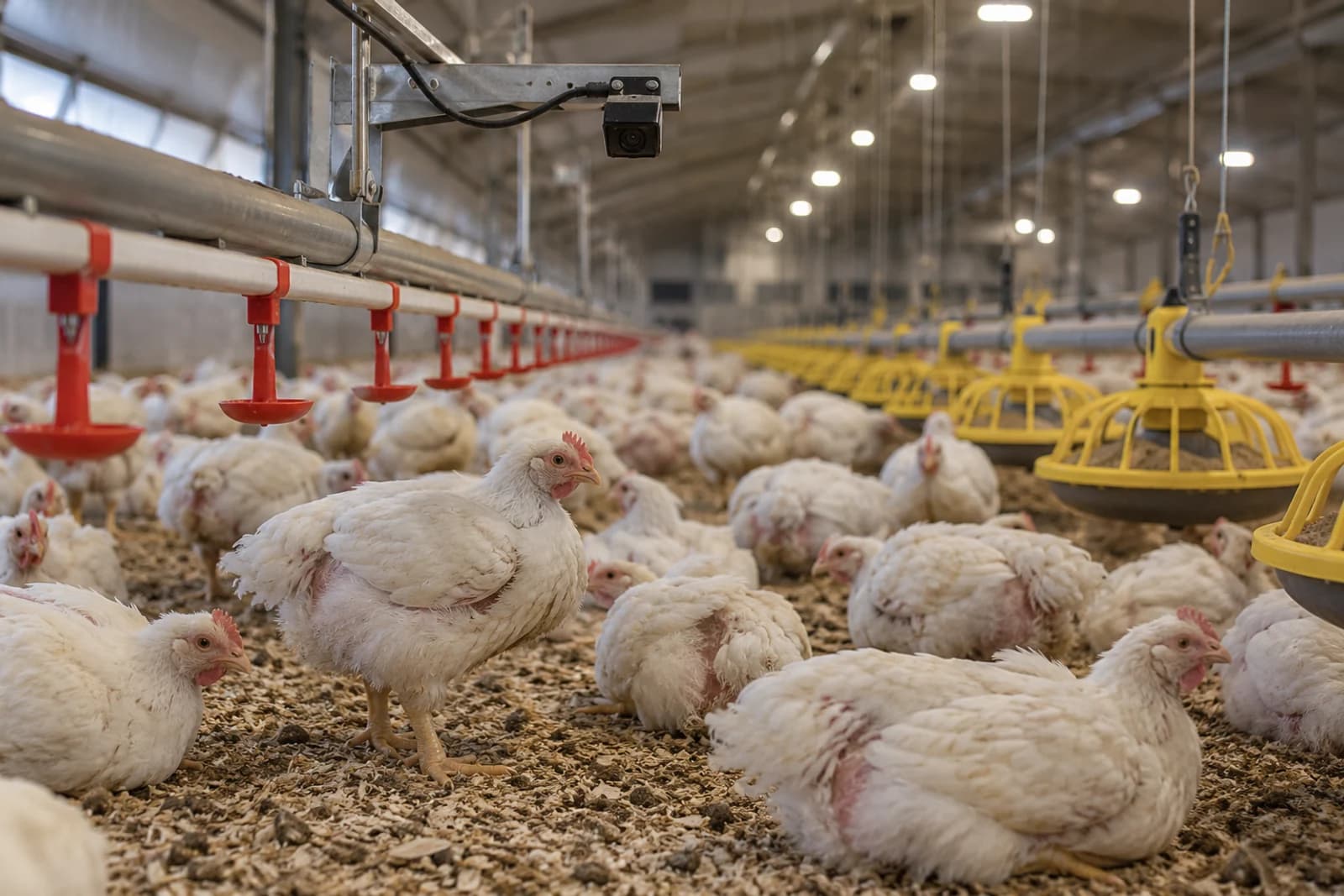
AI-generated illustration of a broiler monitoring setting; not a photograph of a Zenaight installation.
For a farm manager, that means being able to review a developing change in estimated flock variation, compare it with reference weighing and decide where a closer inspection is needed. It also provides a record to compare with feed, water and environmental information already collected on the farm.
The system estimates weight from visual characteristics. Scales remain the reference. We engineer the camera geometry, lighting and sampling around that relationship, then test estimates against reference weights across the growing cycle.
More observations need a better sampling plan
A camera recording thousands of images does not necessarily observe thousands of different birds. Repeatedly capturing the same accessible area can overrepresent birds that spend time there. Selecting only clearly separated birds can also introduce a different bias from the one the system is intended to address.
This is a design requirement we address through camera coverage, capture timing, observation selection and comparisons with reference samples. We distinguish the number of usable observations from a claim about the number of unique birds observed.
Bird overlap, posture, age and changing density are part of that engineering. A useful report makes the observation coverage and data gaps visible alongside the estimate, so the team understands the basis of the trend.
That is how broiler weight monitoring becomes a practical tool for the people managing the flock.
Production counting that explains the total
On the processing line, a counting discrepancy rarely stays at the counter. It travels into batch reconciliation, shift reports and investigations into where the difference occurred.
Conventional sensors remain an excellent choice for a predictable passage event. Computer vision adds value where the operation needs to distinguish items, record exceptions or retain visual evidence of an event.
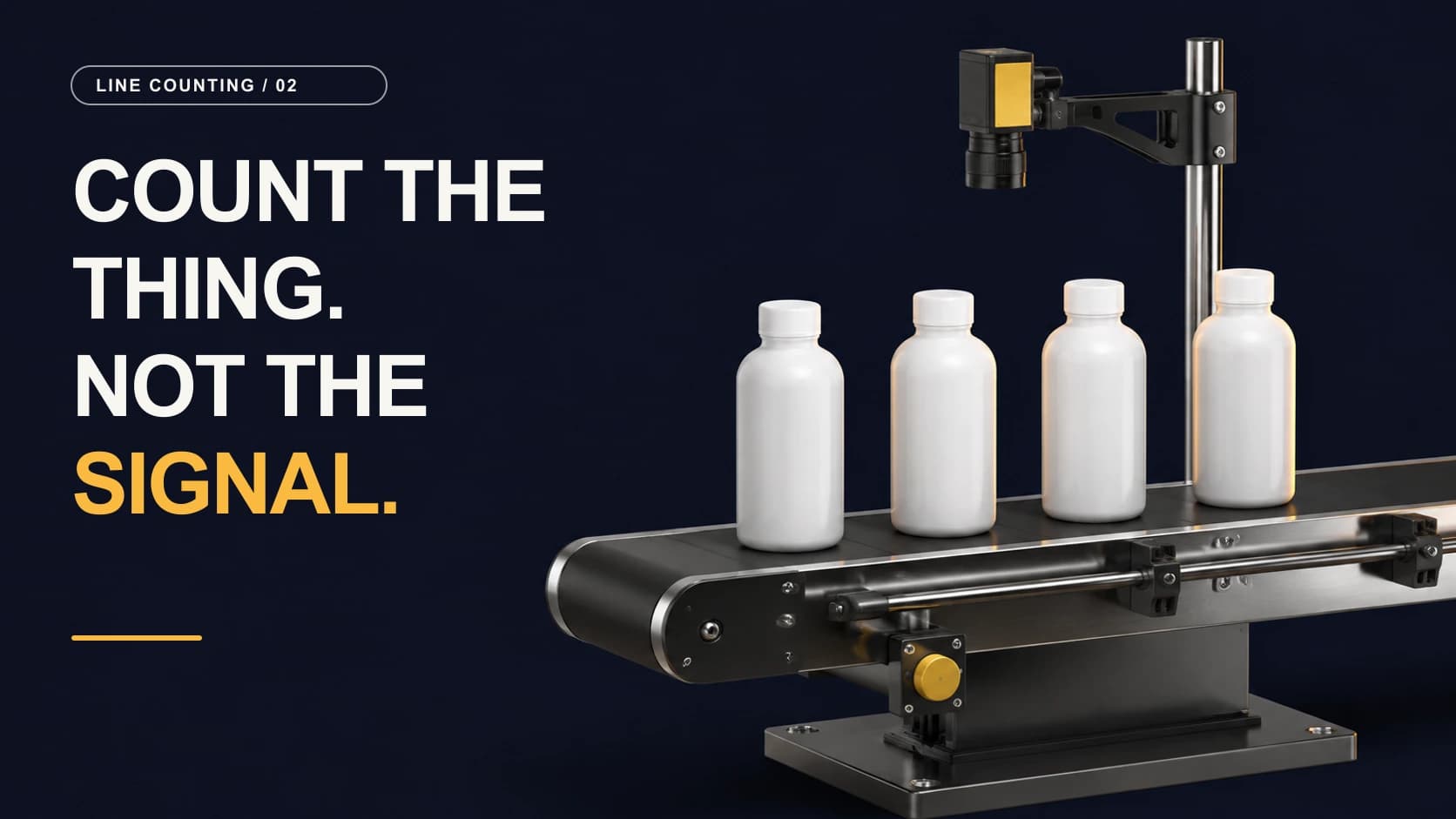
Our vision-based counting approach connects detections to defined production events and reporting. The result is a time-stamped record that supports reconciliation, with exceptions available for review.
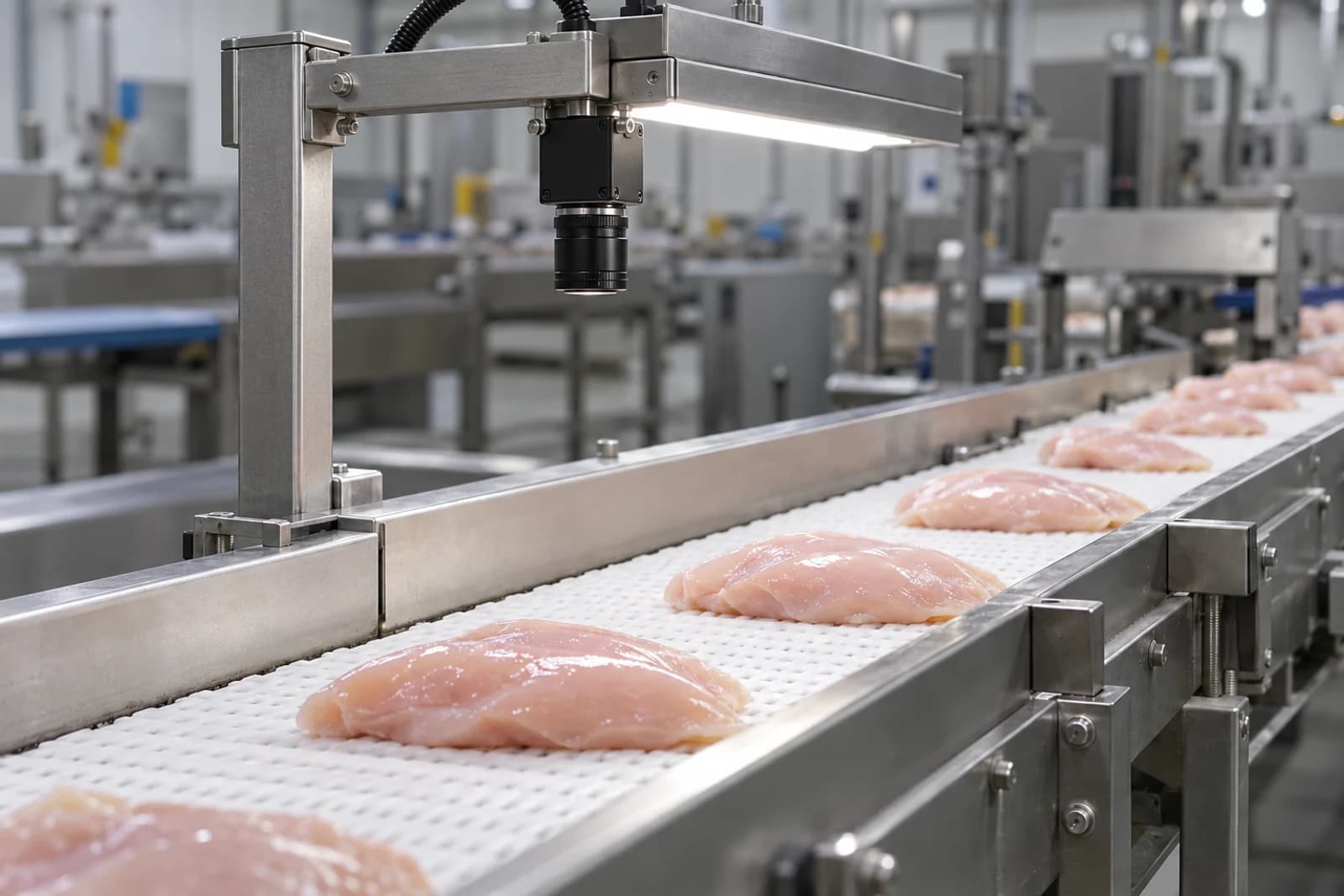
AI-generated illustration of a poultry inspection point; not a photograph of a Zenaight installation.
A reliable count starts with a precise counting rule
Does an item count when it first enters the image, crosses a fixed point or leaves the station? What happens if the belt stops with a product in view? If the line reverses and the same item crosses again, should it count again?
These rules determine whether a technically good detector produces a useful production total.
We define the counting point and event logic around the process. Stops, restarts, empty positions, touching products and rework receive explicit handling. Uncertain events are flagged rather than silently treated as ordinary counts.
For example, a shift discrepancy becomes easier to investigate when the team can review the relevant time window and its exceptions, rather than compare two totals with no supporting history. Counts, timestamps and event records give production and engineering teams a common basis for that discussion.
For more on the engineering, read Production Line Counting with Computer Vision: When Sensors Aren’t Enough.
Visual process verification: check the condition, keep the evidence
The same engineering capabilities support defined visual checks at production points. Depending on the task, that can mean verifying product presence, checking a visible condition or routing an unusual observation to an operator.
We develop these applications around an agreed inspection requirement: what needs to be visible, which variation is acceptable and what action follows a flag. These are application-specific projects, not a claim that every poultry defect is already covered by a standard product.
A review workflow connects the observation to a timestamp, supporting image and recorded decision. That makes the check useful for traceability and follow-up, rather than leaving it as an isolated alert.
Camera inspection addresses visible conditions. Hidden quality attributes need the appropriate other inspection methods. Establishing that boundary is part of defining a system that does the agreed job reliably.
We engineer the complete system around the operation
The model is one part of delivery. Cameras, lenses, lighting, mounting, edge computing, networking and software all contribute to whether the measurement holds up on site.
On a farm, the design needs to accommodate dust, changing light, growing birds and access for maintenance. In a plant, moisture, reflections, washdown and conveyor movement affect equipment selection and installation.
Zenaight brings these elements together with the dashboards, reports and integrations the operation needs. Local processing and data buffering support applications designed to keep core measurement on site, while network access serves agreed functions such as synchronisation and remote support.
Where equipment control is required, we scope the interfaces, safeguards and commissioning with the plant team. Monitoring, operator review and automated control have different consequences when an observation is wrong; their acceptance criteria should reflect that.
Validation is how we establish the performance the operation can rely on. We compare outputs with agreed reference records under representative conditions, including normal production and exceptions. We define how missing or uncertain observations appear in the record and how the system recovers after an interruption.
A weight estimate displayed to three decimal places is not necessarily a better estimate. It just has three decimal places. The reference comparison and operating performance are what matter.
For a breakdown of the delivery scope, see our guide to industrial computer vision system costs in South Africa.
What to establish before installing poultry vision
A productive first discussion starts with five practical questions:
- What decision needs better information? Growth planning, flock investigation and shift reconciliation need different outputs.
- What exactly are we measuring? Define the weight estimate, counting event or visible condition, and where it belongs in the process.
- What is the reference? Agree how camera outputs will be compared with weighing data, verified counts or reviewed inspection examples.
- Which operating conditions must it handle? Include the growing cycle, lighting changes, cleaning, stops, restarts and network interruptions relevant to the application.
- What happens next? Define who sees the output, what triggers a review and how records connect to existing systems.
You do not need to arrive with a camera specification or an AI model selected. Bring the process, the information gap and the decision you want to improve. We turn that into an engineering scope with clear outputs and acceptance criteria.
Give your team a clearer view of production
The experienced farmer will still walk into the house and notice things. The production manager will still know which events deserve attention. Computer vision gives them measurements and a record that extend what they can observe directly.
If you need a clearer view of flock growth and uniformity, counts that reconcile with production, or a defined visual check with supporting evidence, discuss your poultry operation with Zenaight.
We will review the process with you, identify the right measurement point and set out the system needed to deliver it—from image capture and edge processing to integration and reporting.
Explore our poultry AI and computer vision engineering capabilities to see how this fits across the farm and factory.
Further reading
- USDA Agricultural Research Service: Application of Imaging Systems for Monitoring Poultry Well-being — research on camera-based observation of broiler distribution and behaviour.
- Aviagen: Broiler management resources — practical management guidance, including growth monitoring and flock uniformity.
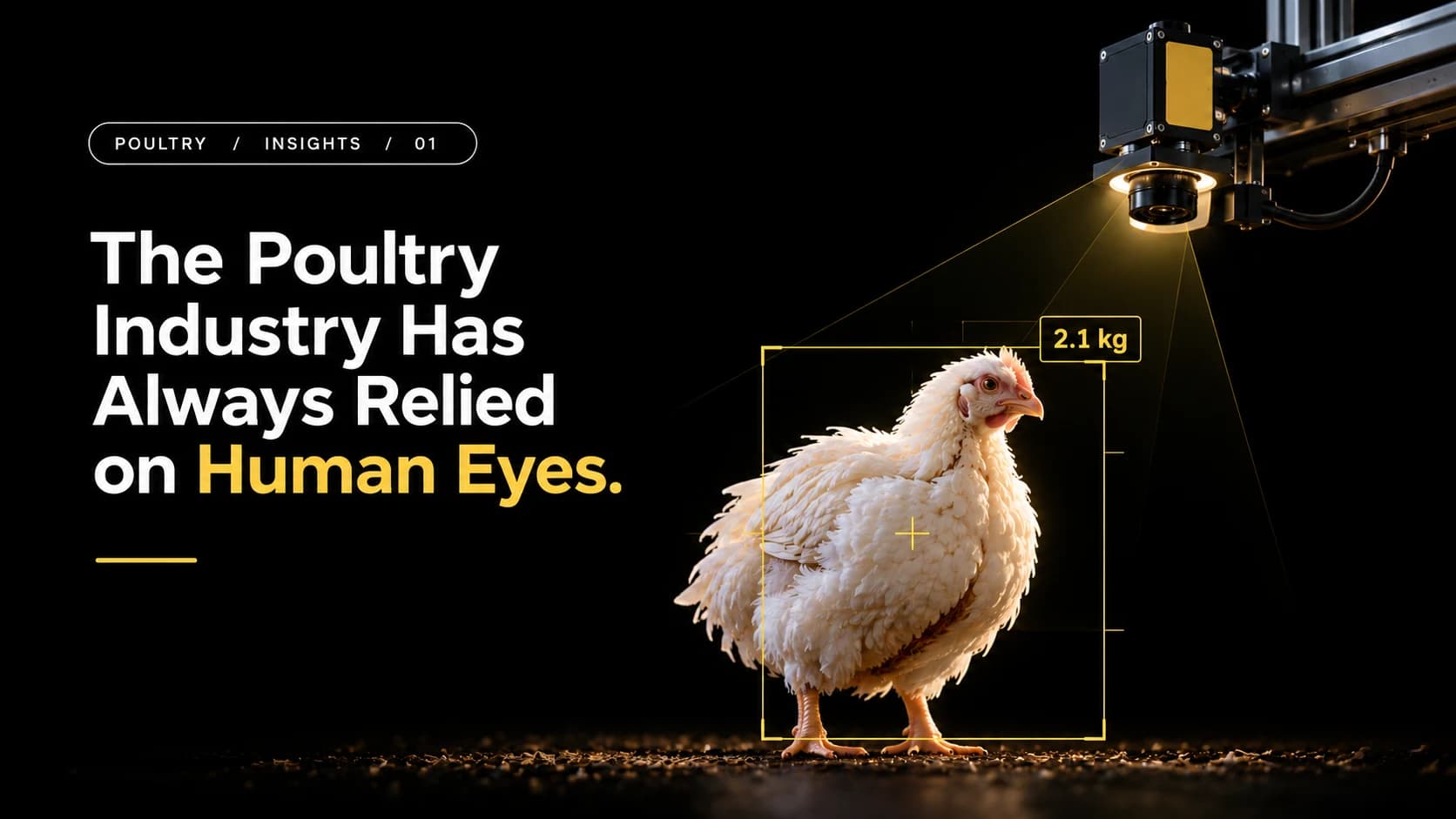
The supplied cover and the generated inline images are conceptual illustrations. The weight displayed on the cover is illustrative, not a measured result or a Zenaight performance claim.