Zenaight Logo
Poultry industry

AI & Computer Vision for Poultry Production

Better visibility across poultry production.

From the broiler house to the processing line, Zenaight engineers computer vision, AI and connected systems that help poultry businesses measure operations, identify problems and make better decisions.

Computer Vision · AI & Analytics · Industrial Integration

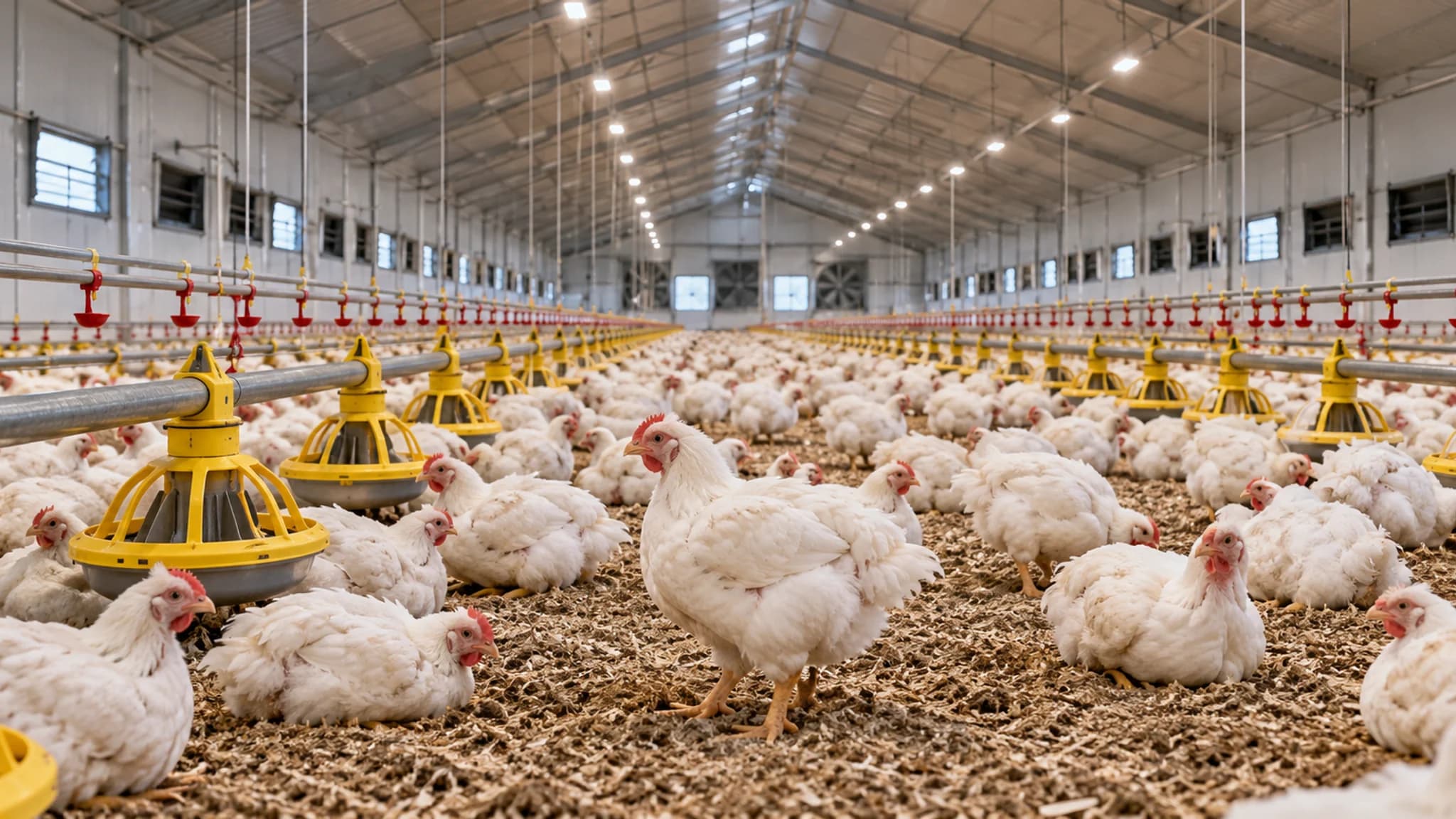
AI-generated illustration of broilers, feeders and drinker lines in a generic poultry house
AI-generated illustration of a poultry environment. Not a Zenaight installation.

You cannot improve what you cannot reliably measure.

Large flocks and fast-moving production lines create gaps between what teams can observe and what systems consistently record. A flock changes every day; small gaps in measurement can become difficult to explain later.

Manual observation remains valuable, but sampling is intermittent and conditions change. Conventional sensors and scales are essential, yet they do not always describe what happened visually or why an event occurred.

Camera-based measurement adds a visual record of production: what passed, how the flock is developing and which events need attention. We combine it with the sensors and reference measurements suited to the task, giving teams information they can use to act with confidence.

Connected engineering across the poultry value chain

Our poultry engineering experience centres on broiler farming and processing. The same capabilities support further applications across the value chain, with each project scoped around its own process and operating requirements.

  1. 01 · Potential application

    Feed & inputs

    Production verification, quality monitoring and traceability.

  2. 02 · Potential application

    Hatcheries

    Visual monitoring, counting and quality-assessment opportunities.

  3. 03 · Relevant engineering work

    Broiler farming

    Weight estimation, flock uniformity and growth monitoring.

  4. 04 · Potential application

    Live-bird logistics

    Movement, handling and operational visibility.

  5. 05 · Relevant engineering work

    Processing

    Counting, inspection, exception reporting and production reconciliation.

  6. 06 · Potential application

    Packaging & distribution

    Inspection, verification and traceability.

Monitor flock growth. Count production. Verify the process.

On the farm

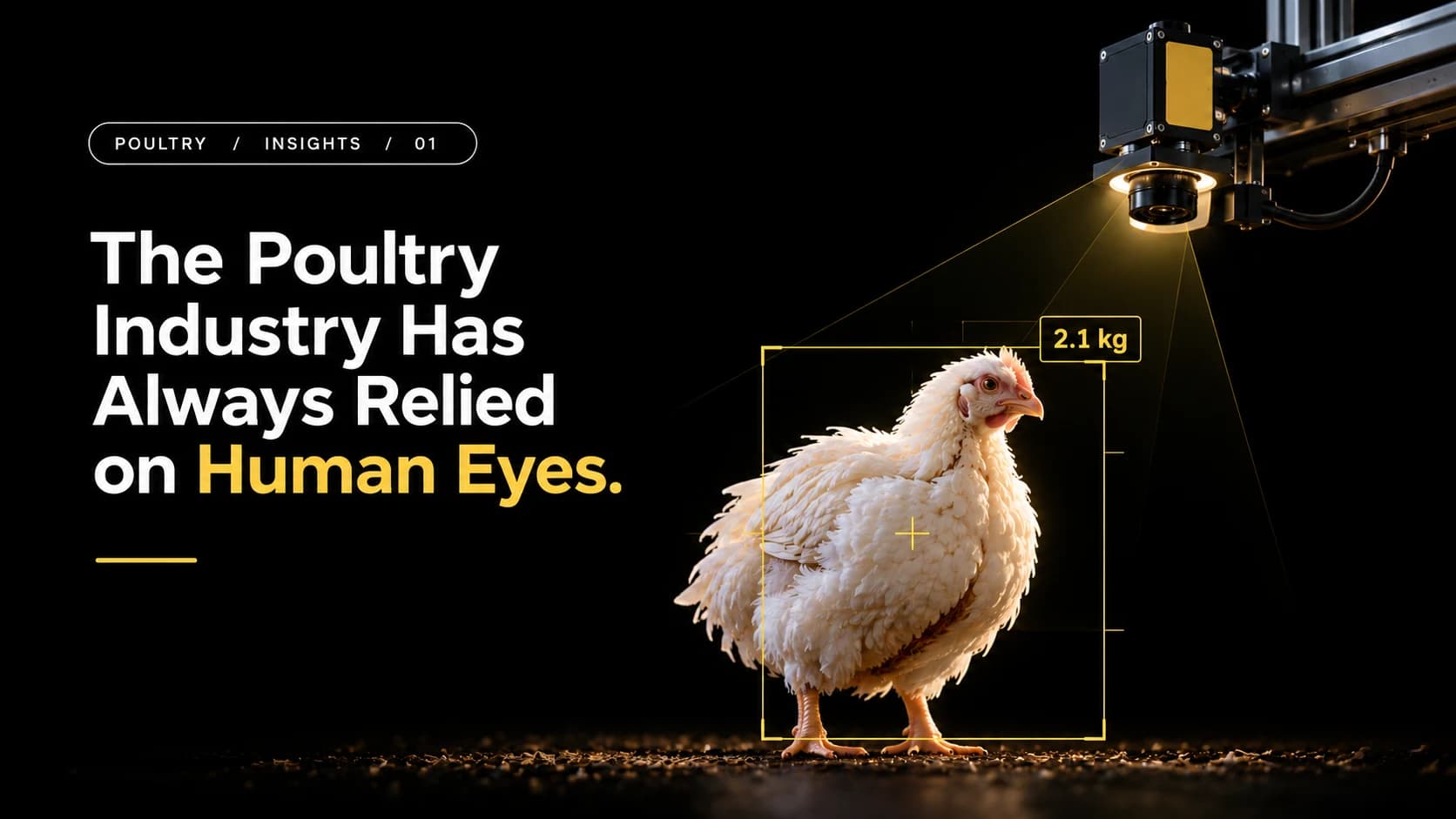
Broiler weight & uniformity estimation

An average weight can hide a wide spread of bird sizes. Intermittent sampling gives a useful reference, but does not describe the whole flock throughout the growing cycle. Weight trends and flock distribution matter when planning feeding, catching and processing.

Camera-based monitoring turns flock images into weight estimates, growth trends and uniformity reports, including coefficient of variation (CV%). Used alongside reference weighing, it gives teams a clearer view of how the flock is developing and how widely bird sizes vary.

We engineer the capture setup around bird density, lighting, camera geometry and the growing cycle, then validate estimates against reference weights. That work establishes a dependable operating range and makes the estimates useful for day-to-day decisions. Cameras estimate weight; scales remain the reference.

Operational outputs: weight trends, flock distribution summaries, monitoring dashboards and alerts against agreed thresholds.

Engineering approach · 01

  1. Representative images
  2. Reference weighing
  3. Validated estimates
Illustrative workflow: from flock images to validated monitoring.

In the processing plant

Poultry counting & production reconciliation

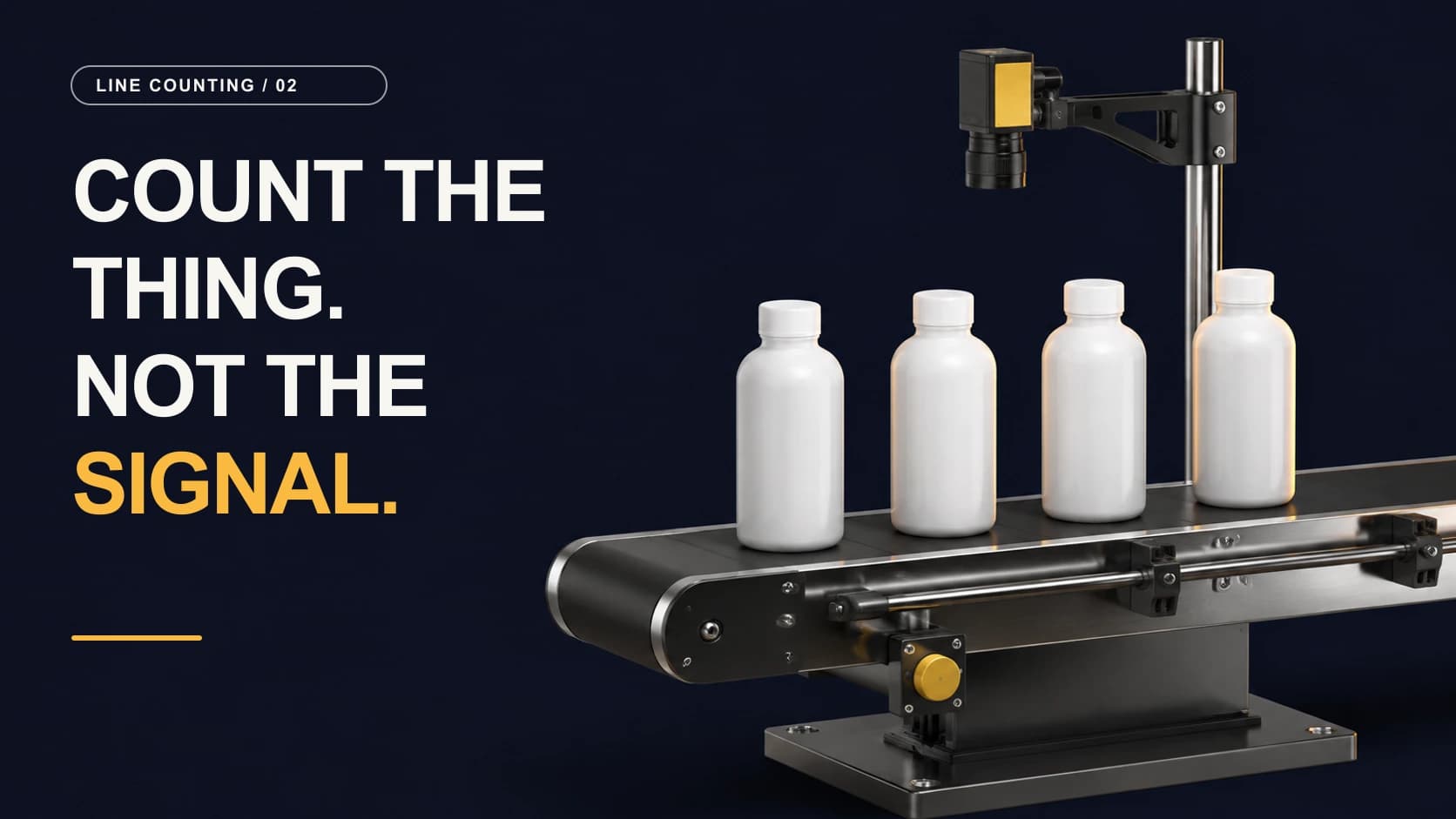
Counting sounds straightforward until objects touch, empty positions pass the camera, or a stoppage changes the rhythm of the line. Occlusion and production events can leave a total that looks plausible but is difficult to reconcile with the shift record.

Vision-based counting combines passage detection, exception monitoring and batch or shift reporting in one operational record. We define the counting point and engineer the logic around rework, line restarts and uncertain observations, so teams can understand the total as well as the events behind it.

We connect counting records to operational software and available line interfaces, giving production teams a consistent view across systems. Where the scope includes equipment control, plant-specific risk assessment and commissioning form part of the engineering process.

Operational outputs: time-stamped counts, exception records and batch or shift summaries that teams can reconcile.

Engineering approach · 02

  1. Observe passage
  2. Review exceptions
  3. Reconcile records
Illustrative workflow: from line events to reconciled production records.

Inspection & verification

Quality monitoring & process verification

Computer vision brings consistent visual checks to defined inspection points. It identifies visible deviations, verifies process steps and records supporting images, giving operators a clear basis for review and follow-up.

For poultry operations, potential applications include appearance checks, process verification and anomaly flags linked to reporting and traceability. We establish which conditions are visibly distinguishable, then design the lighting, camera position and inspection criteria around those checks. Hidden conditions require other inspection methods.

The result is a review workflow that routes flagged observations to the right person and preserves the evidence behind each event. Agreed review criteria, retention and escalation keep the process accountable, with authorised operators responsible for decisions that require human judgement.

Operational outputs: review queues, supporting images and traceable process-verification records for the agreed inspection scope.

Engineering approach · 03

  1. Visible condition
  2. Operator review
  3. Traceable decision
Illustrative workflow for a proposed visual inspection application.

More than cameras and AI models.

A useful system is defined by how it performs with changing lighting, moving birds, crowded conveyors and the realities of maintenance. We bring camera and lighting selection, mounting, electronics, data capture and edge processing together with industrial networking and full-stack software.

We deliver the dashboards, alerts, reports, storage, commissioning and support needed for the agreed application. PLC or IO integration is available where the process calls for it. We design around washdown, dust, light variation, maintenance access and the people who keep the equipment running.

  1. 01Cameras & Sensors
  2. 02Edge AI / Processing
  3. 03Integration & Data
  4. 04Dashboards / Alerts / Reports
Illustrative architecture. Final design depends on the site and application.

For sites with unreliable connectivity, we design local processing and data buffering around the application. Recovery, synchronisation and remote support are planned alongside the core measurement. Defined responses to camera, network and integration interruptions keep the system status visible and the production record clear.

Explore our AI & computer vision capability

Built around real operational conditions.

Our engineering approach addresses the conditions that determine reliability on the farm and production floor, from changing flock density to line stoppages and restarts.

Broiler monitoring

We build weight-trend and flock-variation monitoring around representative images and reference measurements. Testing across bird density, lighting and growing conditions establishes the operating range for reliable monitoring.

Production counting

We engineer counting around the complete production sequence: line speed, object overlap, empty positions, stoppages and restarts. Detection, event logic and exception handling work together to produce traceable operational records.

Practical questions before you begin

Can computer vision work in a poultry house or processing plant?

Yes. Computer vision works in poultry environments when the capture setup and processing are engineered for the task. We account for camera placement, lighting, bird density and cleaning conditions, then validate performance in the operating environment. A site assessment establishes the right setup for your process.

Can these systems connect to existing equipment?

Yes. We integrate with existing equipment and operational software through the interfaces available at your site. This can include PLC or IO connections, production records and dashboards. We confirm interface compatibility and commissioning requirements during scoping.

Does the system need a permanent internet connection?

No permanent internet connection is required for applications designed to process locally. Edge processing keeps the core measurement on site, with connectivity used for agreed functions such as remote access, synchronisation and support. We define that split around your network and operating requirements.

How do you validate accuracy?

We test system outputs against agreed reference data under representative operating conditions. Acceptance criteria are defined up front, then checked across normal production, exceptions and changing conditions. This establishes the performance you can rely on and how the system reports uncertain or missing observations.

Where does a project begin?

Start with a discovery discussion about your process and the decisions you want to improve. We then define the application, review the site or process where needed, and set out the engineering scope, deliverables and acceptance criteria.

Have a poultry operation that needs better visibility?

Bring us the challenge on your farm or processing line. We will assess the process, define the measurements that matter and map out the engineering needed to turn them into useful operational information.